10 things you didn’t know you can do at urgent care
We all know urgent care can take care of lots of injuries and illnesses like coughs, colds, fevers, rashes, burns and bruises.
But did you know there’s so much more? Jacob Mefford, PA, clinical director of OSF OnCall Urgent Care, shared some of the most surprising facts about this high-quality, convenient, affordable kind of care.
What Urgent Care Can Do
1. Does urgent care do X-rays?
Many are surprised to learn that urgent care can do X-rays, providing a quick and convenient way to evaluate injuries and illnesses without a trip to the emergency department.
X-rays are an important tool that helps providers identify fractures, dislocations, joint injuries and certain lung and chest conditions. Common areas we can perform X-rays on at urgent care include wrists, ankles, arms, legs and chest among others.”
On-site providers use these results to help determine the most appropriate treatment plan. All X-ray images taken at urgent care are reviewed by a radiologist.
Need urgent care?
2. Does urgent care do stitches?
Urgent care providers can do stitches for non-life-threatening injuries.
If your wound is deep and gaping or doesn’t stop bleeding after 5-10 minutes of pressure, an urgent care provider can help.
If your injury is life-threatening; on delicate areas like your face, lips or eyes; or won’t stop bleeding after 15-20 minutes, head to the emergency department. They have the equipment needed to manage more complex injuries.
If you have concerns about infection, scarring or an outdated tetanus immunization, an urgent care professional has you covered.
3. Can you get a physical at urgent care?
You can get a physical exam at urgent care. This is a great option if you need a physical quickly and don’t have time to see your primary care physician. However, a physical exam does not replace an annual wellness visit.
Urgent care provides many types of physical examinations which include work, school or sports physicals. If your employer requires a pre-employment physical and drug screen, urgent care has you covered for that, too.
During your physical exam they may check your vitals, take your weight and height, perform a reflex exam and listen to your heart and lungs. Upon request, your results can be shared with your primary care provider, creating a seamless connection between care. However, if you or your child needs certain vaccines, such as multi-dose DTaP, rotavirus or polio, you should schedule an appointment with your primary care provider.
4. Can urgent care refer you to a specialist?
Urgent care providers can refer you to a specialist. At your appointment, the provider will check your vitals, talk to you about what’s going on and determine next steps. Many times you can walk out the door with a treatment plan. But in some cases, they may refer you to the emergency department, your primary care provider or a specialist for more advanced treatment.
5. Can urgent care prescribe medication?
Urgent care providers can prescribe medications, just like your normal primary care providers do. When you visit urgent care, you are often seen faster than at a regular primary care visit. These quick visits tend to give you access to your prescriptions earlier.
Some urgent care locations even offer onsite medications. You can also receive antibiotics for symptoms such as tooth pain or infections. That means you can walk out the door with the meds you need and can start feeling better even faster.
6. Does urgent care treat gynecological issues?
People often ask if they can get testing for sexually transmitted illnesses at urgent care. Many locations offer testing for sexually transmitted diseases (STDs) or sexually transmitted infections (STIs). Urgent care can prescribe antibiotics to treat STIs or other kinds of bacterial infections. However, some STIs may require more extensive patient education and ongoing treatment.
Urgent care can treat gynecological issues and some other women’s health concerns, too. The providers can also refer you to OB/GYN care if needed.
However, if you are experiencing heavy bleeding whether you are pregnant or not, it is important to know when it’s OK to go to urgent care. If you’re soaking more than one pad an hour, this may indicate a serious condition in which you should go to the emergency department immediately.
7. Does urgent care provide pediatric care?
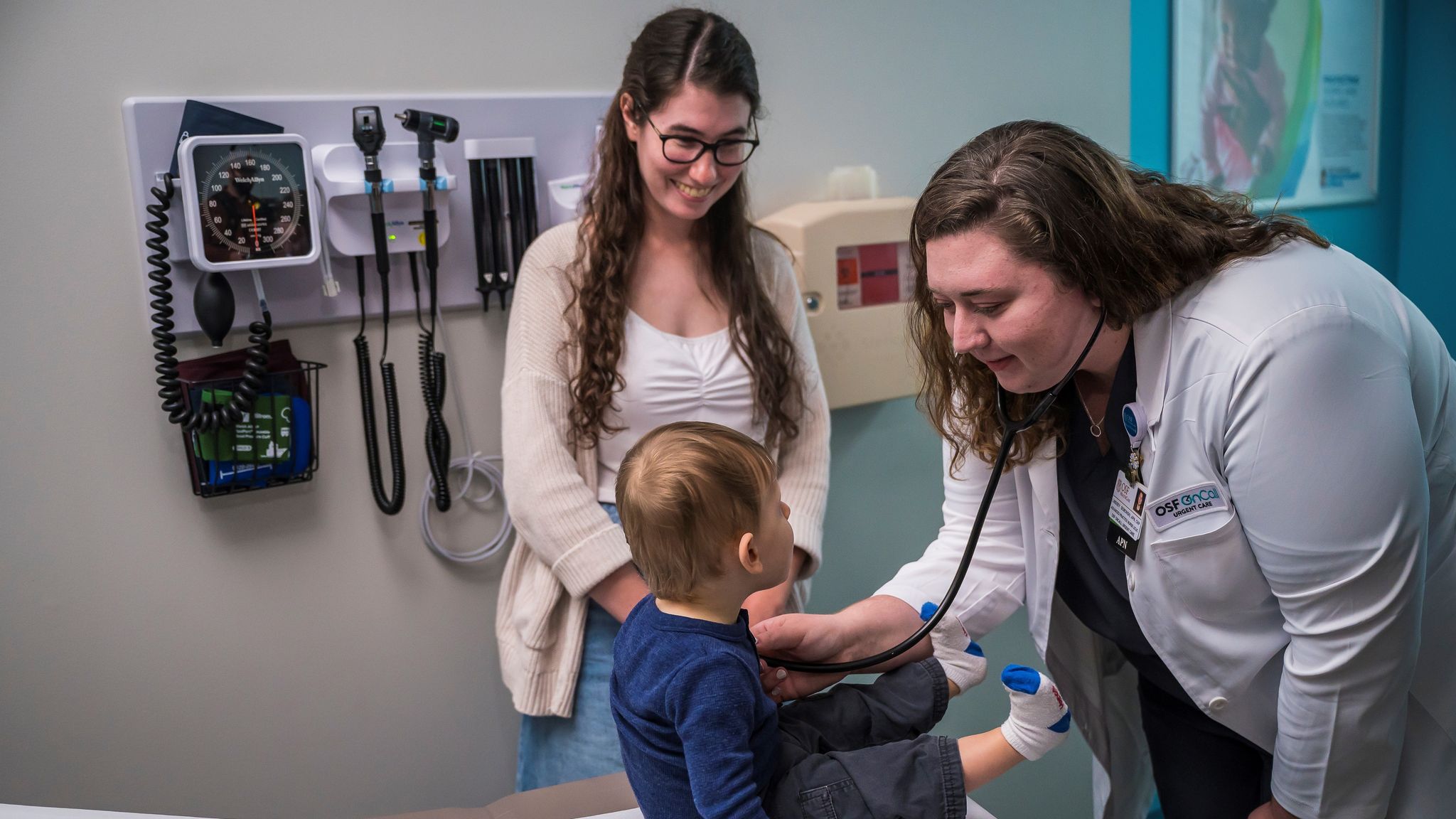
Pediatricians and urgent care providers each play an important role in your child’s care. For routine checkups, preventive care and ongoing health concerns, your pediatrician is a good resource. When your child needs prompt attention for a non-emergency illness or injury, urgent care offers convenient walk-in or virtual care options.
Consider taking your child to urgent care if they have minor cuts that may need stitches, sprains or burns, a sore throat or a fever with cold or flu-like symptoms.
8. Can urgent care provide doctor’s notes?
Yes, urgent care can give you a doctor’s note to excuse absences from work or school, or to let others know that you will need to take time off for sick days. With walk-in and virtual visit options, you can be seen quickly, meaning you can return to work sooner.
Urgent care doctor’s notes may be used for work, school, insurance claims and even legal matters. With urgent care, you can quickly and conveniently legitimize time-off needs and properly document a medical condition.
9. Can urgent care treat minor fractures, sprains and strains?
Whether it’s a sprained ankle, a wrist fracture or a strained hamstring, minor injuries can be taken care of outside of the emergency department. Urgent care providers can offer a range of treatments to manage the injury quickly and efficiently without the long wait times. They can diagnose and stabilize broken bones, refer you to the appropriate care setting or direct you to the nearest emergency department, if your injury requires. Urgent care provides follow-up care and guidance on how to care for your injury at home, creating a seamless experience.
10. Does urgent care provide virtual visits?
Urgent care provides virtual visit options. With virtual visit options, you can receive care from the comfort of your own home and speak with a trusted provider virtually. Virtual visits can diagnose and treat various illnesses and injuries, offering quick and convenient care.
Urgent care also has in-clinic virtual visits that combine the convenience of virtual care with the benefits of an urgent care setting. Using advanced technology, providers can look into your ears and throat as well as listen to your heart and lungs remotely. If testing for illnesses like flu or strep are needed, they can be ordered during your visit and completed on site.
When to Use Urgent Care
While urgent care isn’t a replacement for emergency services or routine preventive checkups with your primary care provider, it is a tool that can be used alongside these services. Each one plays a part in the care you receive. Primary care provides preventive care and treats ongoing health needs, while urgent care offers convenient treatment for minor illnesses and injuries. Emergency care is available for serious or life-threatening conditions.
As part of OSF HealthCare, your care is connected across services, helping your providers work together to make sure they have all the information they need to provide you with the greatest possible care, regardless of where you receive treatment
If you are experiencing a medical emergency, such as chest pain, difficulty breathing, severe dizziness, confusion or headache, stroke symptoms, a severe allergic reaction or another life-threatening condition, call 9-1-1 or go to the nearest emergency department.